

The shoulders rise toward the ears. The breath gets shallow. Lunch becomes a few bites between messages. By evening, there is that familiar feeling of being tired but not fully settled, as if the mind is still standing in the doorway of the workday.
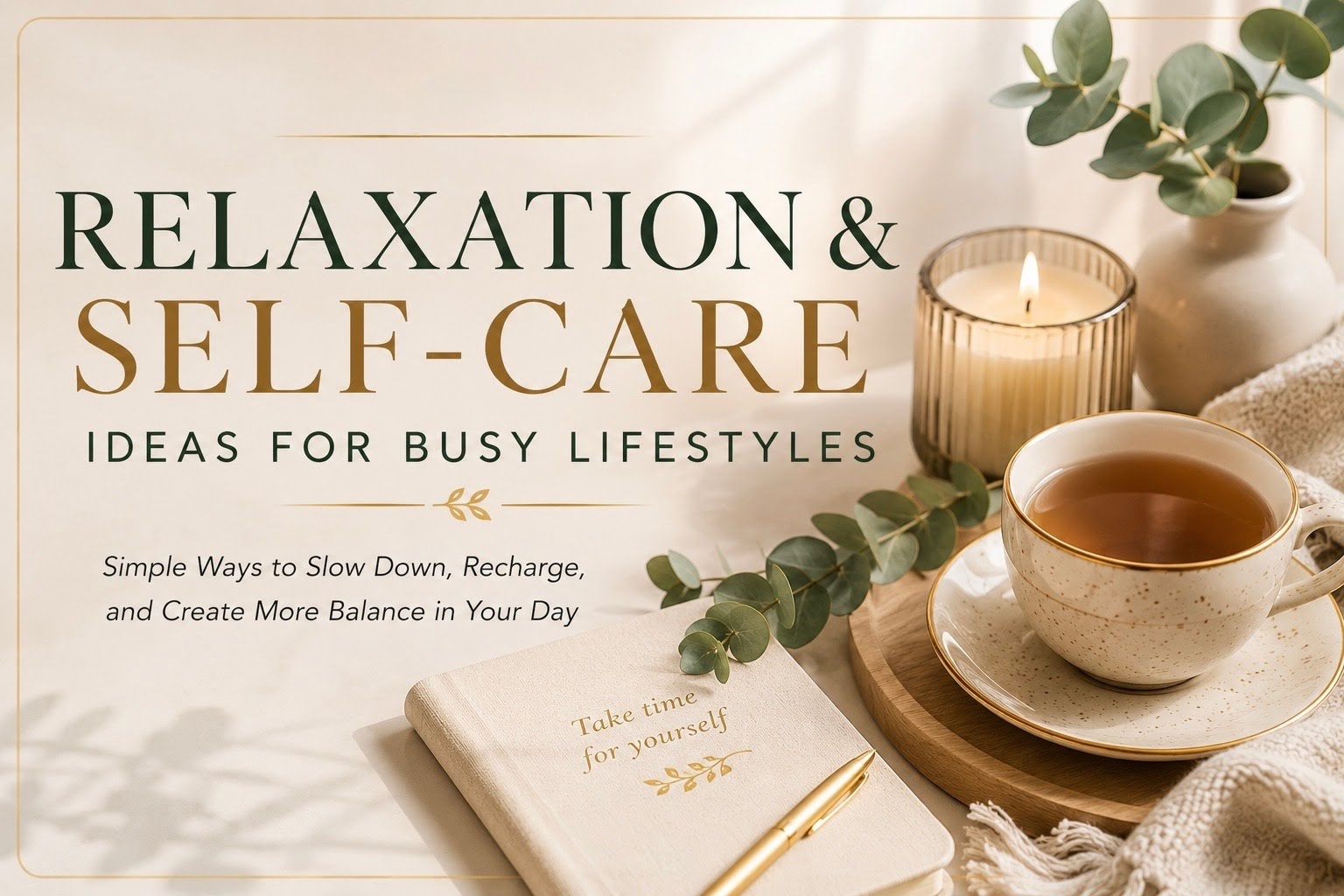
That is often where Relaxation and Self-Care gets misunderstood.
It does not have to look beautiful. It does not have to take an hour. It does not need to involve a perfect morning routine, a silent house, or a long list of wellness habits that make a busy person feel behind before they even begin.
For many people, real self-care begins much smaller. A slower breath. A glass of water. A quiet meal. A few minutes away from the screen. A calming wellness appointment that may support a sense of ease. The kind of care that says, gently, “You are allowed to come back to yourself.”
The source material for this brief makes an important point: self-care for a busy schedule should be built through short, repeatable “micro moments,” not more tasks that create guilt. That idea matters because many people do not need more pressure. They need a softer way back to balance.
The American Psychological Association’s 2025 Stress in America report found that 69% of adults said the spread of inaccurate or misleading information is a major source of stress. That fits the way many people feel now: mentally full, emotionally stretched, and constantly sorting through noise.
Key Takeaways
- Self-care can be simple, short, and realistic.
- A gentle wellness routine may support stress relief, comfort, and emotional balance.
- Relaxation techniques work best when they fit naturally into daily life.
- Wellness services may support relaxation and digestive comfort, but they are not a medical treatment.
What Does Relaxation and Self-Care Really Mean?
Relaxation and Self-Care means using simple, supportive habits to help the body and mind soften, reset, and feel more balanced. It may include breathing practices, mindful relaxation, gentle movement, quiet time, digestive wellness support, sauna sessions, or other calming rituals.
It is not about doing everything perfectly.
It is about noticing what the body is asking for before stress becomes louder. Maybe the body needs movement. Maybe it needs food eaten slowly. Maybe it needs stillness. Maybe it needs professional wellness support in a calm space.
A helpful self-care routine should feel like a steady hand on the shoulder, not another person shouting instructions from across the room.
Why Busy People Often Feel Disconnected From Their Own Needs
Busy lifestyles can make people very good at responding to everyone else.
The client needs an answer. The family needs attention. The inbox needs clearing. The errands need doing. Somewhere in all of that, the body becomes background noise.
Then the body gets louder.
A person may notice tight muscles, restless sleep, digestive discomfort, irritability, low energy, or the sense of being “on” all the time. These feelings do not always mean something serious is happening, but they can be signs that the body would benefit from more support, more pacing, and more moments of calm.
This is where gentle relaxation techniques can help create a sense of ease. Mayo Clinic notes that common relaxation methods may include deep breathing, meditation, massage, yoga, tai chi, music and art therapy, aromatherapy, and hydrotherapy.
The key is not choosing the most impressive practice.
The key is choosing the one a person can actually return to.
How Can Someone Practice Self-Care Daily Without Feeling Overwhelmed?
The simplest place to begin is with what is already there.
There is already a morning drink. There is already a bathroom break. There is already a lunch hour, even if it is short. There is already a walk from the car to the door. There is already a moment before sleep.
Self-care becomes easier when it attaches to ordinary life.
Try this gentle daily reset:
1. Take three slow breaths before checking the phone.
2. Drink water before the second cup of coffee.
3. Eat one meal without scrolling.
4. Step away from the screen for two quiet minutes.
5. End the day by naming one thing that felt okay.
This does not need to be dramatic to be meaningful. Some people find that these small pauses help them feel more present, more grounded, and less swept away by the pace of the day.
The Soft Reset Method for Busy Lifestyles
A busy person does not need a complicated plan. A calm rhythm is often enough.
Think of the day in three parts: ARRIVE, STEADY, RELEASE.
| Part of the Day | What the Body May Need | Gentle Practice | What to Avoid |
| Morning | A calm start before demands begin | Three breaths, water, or a quiet check-in | Opening messages before noticing how the body feels |
| Midday | A short reset from mental overload | Mindful lunch, stretching, or a 2-minute walk | Calling screen scrolling “rest” when it feels stimulating |
| Evening | Permission to let the day end | Warm shower, soft music, journaling, or slow breathing | Carrying work tension straight into bed |
| Weekly | Deeper restorative support | A calming wellness session or planned quiet time | Waiting until exhaustion makes rest unavoidable |
This kind of routine is not strict. It is flexible. It gives the body several chances to feel supported throughout the day.
What Are the Best Relaxation Techniques for Stress?
The best relaxation techniques are the ones that feel safe, simple, and repeatable.
Some people feel calmer with stillness. Others need movement first. Some people like guided breathing. Others prefer warmth, quiet, or hands-on wellness support. There is no single correct answer.
Here are beginner-friendly options:
Slow breathing can help create a pause between the body and the next demand. A simple version is to breathe in gently, then breathe out a little longer than the inhale.
This practice involves tensing and relaxing muscle groups, often starting at the feet and moving upward. NCCIH describes relaxation techniques such as progressive relaxation, guided imagery, biofeedback, self-hypnosis, and deep breathing exercises.
A short walk can become a calming ritual when the focus shifts to the feet, the air, the light, and the rhythm of movement.
Soft music, a warm bath, a comfortable blanket, or gentle aromatherapy may help create a sense of comfort for some people.
Eating without a phone can support mindful relaxation and may help the body feel less rushed during the day.
These practices are not about forcing the body to relax. They are about offering the body conditions where relaxation may become easier.
How Does Digestive Wellness Fit Into Self-Care?
Digestive comfort can play a meaningful role in how a person feels day to day.
When life is rushed, meals often become rushed too. A person may eat quickly, drink less water, sit for long hours, or carry tension in the abdomen without realizing it. Over time, some people notice fullness, heaviness, or general discomfort.
Digestive wellness is not separate from self-care. It can be part of the same gentle conversation with the body.
Colon hydrotherapy is described on the business website as a wellness service where warm, filtered water is introduced slowly into the colon and then released, with sessions designed to be calm and relaxing. The service is presented as part of a wellness routine that may support digestive comfort and overall well-being for some individuals.
It is important to keep expectations realistic. Colon hydrotherapy is not a medical treatment. It is not intended to diagnose, treat, cure, or prevent disease. Results vary, and anyone with medical concerns should speak with a qualified healthcare provider before booking.
That kind of honesty matters. Trust grows when wellness support is explained clearly and gently.
Can Infrared Sauna Help Create a Sense of Ease?
For some people, warmth is one of the easiest ways to slow down.
A dry infrared sauna session may support relaxation by creating a quiet, warm space where the body can rest from constant stimulation. The business website describes dry infrared sauna as a relaxing and gentle wellness service that uses infrared heat to warm the body directly and create a comfortable experience. It also notes that many clients enjoy sessions as part of a wellness routine to promote relaxation, ease muscle tension, and support overall comfort.
For a busy person, the benefit may be more than the heat itself.
It is the pause.
A room where nothing needs to be answered. A few minutes where the body is not being hurried. A protected pocket of time that can help create a sense of calm.
Again, results vary. Infrared sauna therapy should be viewed as wellness support, not a medical treatment or a guaranteed outcome.
What Most People Get Wrong About Self-Care
Many people think self-care should feel like a full lifestyle transformation.
That is usually where it becomes too heavy.
A person tries to change sleep, food, movement, mindfulness, hydration, journaling, and boundaries all at once. Then real life interrupts, and the whole plan falls apart.
A gentler approach works better.
Instead of: “I need a perfect self-care routine.”
Try: “What is one small thing that would help me feel more settled today?”
Instead of: “I failed because I missed my routine.”
Try: “I can return to one calming habit now.”
Instead of: “Rest has to be earned.”
Try: “Rest helps me keep going with more steadiness.”
Instead of: “One service or habit should fix everything.”
Try: “Support works best as part of a balanced wellness routine.”
Self-care is not a performance. It is a relationship with the body.
A Realistic Day of Relaxation and Self-Care
Picture someone with a full schedule.
They wake up and want to reach for the phone, but instead they take three slow breaths first. Not a full meditation. Just enough to arrive.
At lunch, they put the phone face down for five minutes. They taste the food. They notice their shoulders. They unclench the jaw.
After work, they sit in the car for one quiet minute before heading inside. No music. No scrolling. Just a breath and a reminder: “The workday is done.”
Later in the week, they choose a supportive wellness service because their body has felt tense and heavy. They do not expect a miracle. They simply make space for comfort, relaxation, and care.
That is sustainable self-care. Small enough to repeat. Kind enough to trust.
How to Build a Wellness Routine That Lasts
A lasting routine should feel supportive, not strict.
Start here:
- Choose one morning calming cue.
- Choose one midday pause.
- Choose one evening release ritual.
- Keep water nearby.
- Eat one meal more slowly.
- Move the body gently.
- Schedule support before burnout builds.
- Let the routine change when life changes.
This is where many people find freedom. The routine does not have to be the same every day. It only needs to keep pointing the person back toward balance.
As writer Anne Lamott famously said, “Almost everything will work again if you unplug it for a few minutes, including you.”
A Gentle Note on Wellness Services and Expectations
Wellness services can be meaningful when they are approached with clarity.
The center’s service menu includes colon hydrotherapy, dry infrared sauna, and foot bath sessions in Bakersfield, California.
These services may support relaxation, comfort, and a more intentional wellness routine. They are not medical treatments. They should not replace care from a qualified healthcare provider. People with health concerns, pregnancy, recent surgery, chronic conditions, or digestive symptoms should seek medical guidance before starting any new wellness service.
That is not a discouraging message. It is a respectful one.
The body deserves care that is both comforting and careful.
Conclusion: Self-Care Can Be Quiet and Still Count
A busy life does not always leave room for long pauses.
But even a short pause can matter.
A breath before the inbox. A slower lunch. A warm sauna session or a calming digestive wellness appointment. A few quiet minutes at night. These are not small because they are meaningless. They are small because they are possible.
Relaxation and Self-Care is not about becoming a different person. It is about helping the person already carrying so much feel a little more supported.
For gentle wellness support in Bakersfield, Colon Hydrotherapy & Wellness Center offers relaxation-focused services in a calm setting. To ask questions or schedule a session, call or text (661) 699-6941 or email colonicwithshabi@gmail.com.
Relaxation and Wellness Services in Bakersfield
For individuals seeking relaxation-focused wellness services in Bakersfield, Colon Hydrotherapy & Wellness Center offers:
- Colon Hydrotherapy
- Dry Infrared Sauna
- Ionic Foot Detox Sessions
These wellness services are designed to support relaxation, comfort, and overall well-being in a calm and welcoming environment.
Colon hydrotherapy, infrared sauna, and ionic foot detox services are wellness-based services and are not intended to diagnose, treat, cure, or prevent any disease. Individual experiences and results may vary. Anyone with medical concerns should consult a qualified healthcare provider before beginning any new wellness service.
FAQs
1. What is relaxation and self-care?
Relaxation and self-care means using gentle habits and supportive practices to help the body and mind feel calmer, more comfortable, and more balanced.
2. How can someone practice self-care daily?
Start with one small habit, such as three slow breaths in the morning, a quiet lunch break, or a short evening reset before bed.
3. What are the best relaxation techniques for stress?
Some helpful options include slow breathing, progressive muscle relaxation, mindful walking, meditation, soft music, journaling, and screen-free rest.
4. What are quick self-care ideas for busy people?
Try drinking water slowly, stretching for two minutes, stepping outside, taking a few calming breaths, or sitting quietly before the next task.
5. How can someone relax after work?
A gentle after-work routine may include changing clothes, turning off notifications, taking a short walk, breathing slowly, or listening to calming music.
6. How can someone create a wellness routine?
Choose one morning habit, one midday pause, and one evening calming ritual. Keep it simple enough to repeat during a busy week.
7. What are the benefits of infrared sauna for relaxation?
Some people find that infrared sauna sessions help create a sense of warmth, comfort, and quiet. It may support relaxation as part of a wellness routine.
8. What is colon hydrotherapy?
Colon hydrotherapy is a non-medical wellness service that uses warm, filtered water in a calm setting to support natural elimination and digestive comfort.
9. Are wellness services in Bakersfield a medical treatment?
No. Services such as colon hydrotherapy, infrared sauna, and foot bath sessions are wellness-based and are not intended to diagnose, treat, cure, or prevent disease.
10. How can someone book a relaxing wellness session?
Appointments and questions can be handled by calling or texting (661) 699-6941 or emailing colonicwithshabi@gmail.com.